
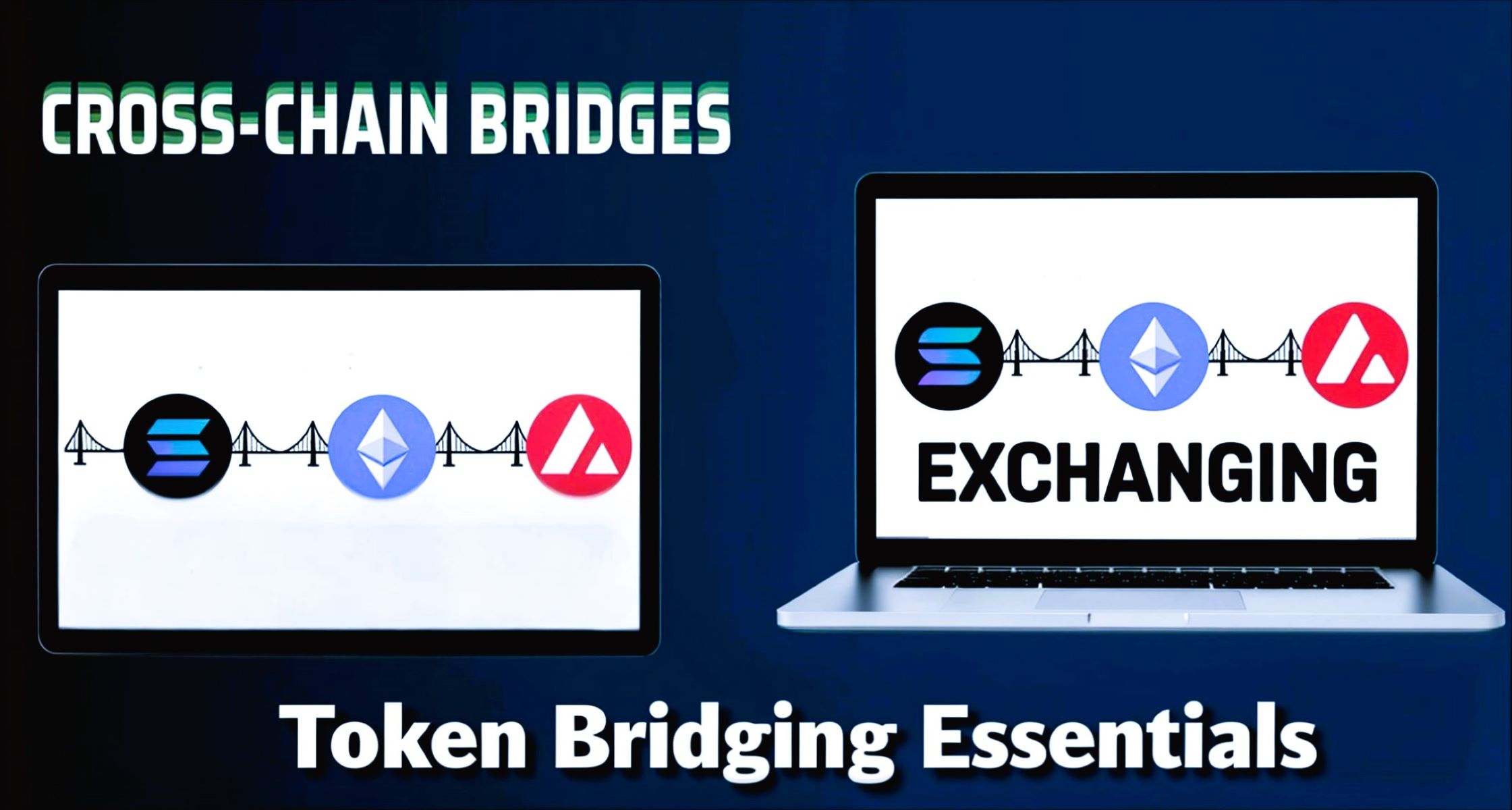
Ever tried swapping one cryptocurrency for another, only to find you can’t do it directly? That’s where bridging tokens comes in. It might sound technical at first, but it’s simpler than you think. On a trusted crypto exchange website, bridging lets you move your tokens from one blockchain to another so you can complete the swap. It matters because not all blockchains work together. Here, you’ll see what bridging tokens means, why it’s important, and how to do it step-by-step — without getting lost in jargon.
What Are Bridging Tokens?
Before we dive into the mechanics and reasons behind bridging tokens, it’s important to understand what the term really means. In the world of cryptocurrency, a bridge functions like a digital connector between two separate blockchain networks. Imagine a physical bridge that allows you to travel from one island to another — in crypto terms, this “bridge” lets you move your assets across different blockchains that would otherwise remain isolated from each other. Since each blockchain operates independently with its own rules and tokens, bridging tokens essentially lets you transfer your digital assets so they can be used beyond their native environment.
Think of it this way: if you have a token like Ethereum (ETH) on the Ethereum blockchain, but you want to participate in activities on another blockchain, say Binance Smart Chain (BSC), you can’t simply send your ETH directly to BSC. The two blockchains don’t natively “talk” to each other. This is where bridging comes into play. By using a bridge, your original tokens are locked or held securely on the source blockchain, and in exchange, an equivalent amount of tokens — often called wrapped tokens — are minted on the destination blockchain. This wrapped version represents your original tokens and can be used within the new blockchain’s ecosystem.
Bridging tokens opens up a lot of possibilities. For example, DeFi platforms, NFT marketplaces, and games might exist only on certain blockchains, so moving your tokens across these networks is essential if you want to access those services. The bridge ensures that your tokens maintain their value while giving you the flexibility to explore new blockchain environments. It’s like converting your local currency into another when traveling abroad — the underlying value remains, but the “format” changes so it’s accepted where you go.
Of course, bridging tokens isn’t just about convenience. It also helps users avoid high transaction fees or slow confirmations on one blockchain by moving assets to a more efficient or cost-effective network. This flexibility can save users time and money while broadening the scope of what they can do with their crypto holdings. So, bridging tokens is a powerful tool that enhances interoperability between blockchains, making the whole crypto ecosystem feel more connected and user-friendly.
Why Do You Need to Bridge Tokens?
- Network Compatibility
Not all tokens are available on every blockchain. Each blockchain has its own unique set of supported tokens and protocols. If you want to use a token on a network where it doesn’t naturally exist, bridging is necessary to make that token compatible with the new blockchain. Without bridging, your assets remain confined to their original blockchain and cannot be used elsewhere. - Lower Transaction Fees
Some blockchains, especially popular ones like Ethereum, can have very high transaction fees (also called gas fees), especially during times of heavy usage. Bridging your tokens to a blockchain with lower fees—such as Binance Smart Chain or Polygon—allows you to save money on transactions, making trading, staking, and transfers much more affordable. - Access to Exclusive Platforms and dApps
Different blockchains host different decentralized applications (dApps) and decentralized finance (DeFi) services. By bridging your tokens, you gain access to platforms that are not available on your token’s native chain. This expands your options for trading, lending, borrowing, farming yields, and even gaming or NFTs on multiple blockchains. - Faster Transaction Speeds
Some blockchains process transactions much faster than others due to differences in block times and network design. If you need quick confirmations and faster execution, bridging tokens to a blockchain with quicker transaction speeds can enhance your overall experience and help you respond to market opportunities swiftly. - Increased Flexibility in Portfolio Management
Bridging tokens gives you the flexibility to diversify your holdings across multiple blockchain networks. This reduces your dependence on a single blockchain and spreads your risk. It also enables you to take advantage of different network strengths, such as lower fees on one chain and better dApp options on another. - Improved Liquidity Options
Some blockchains have deeper liquidity pools for certain tokens, making it easier to buy, sell, or swap without large price slippage. Bridging your tokens to networks with better liquidity options means you can trade more efficiently and get better prices.
How Does Bridging Tokens Work?
| Step | What You Do | Tools/Platforms | What Happens Behind the Scenes | User Tips |
| Choose Your Bridge | Select a reliable and trusted bridging service to use. | Binance Bridge, Polygon Bridge, Wormhole, Avalanche Bridge | The bridge acts as a gateway between two different blockchains, enabling token transfer. | Research bridge reputation and security before choosing. |
| Connect Your Wallet | Connect your crypto wallet to the source blockchain network. | MetaMask, Trust Wallet, WalletConnect-compatible wallets | The wallet links your tokens and allows you to authorize transactions. | Make sure your wallet is funded and connected properly. |
| Select Token and Amount | Pick the token you want to bridge and specify how much to send. | Bridge’s web interface or app | The bridge reads your token balance and locks the specified amount. | Double-check the token and amount before confirming. |
| Confirm the Bridge | Approve the transaction and pay any required network fees. | Wallet interface | Your tokens are locked on the original blockchain; a smart contract is triggered. | Check current gas fees to avoid overpaying. |
| Receive Wrapped Tokens | Tokens are minted or released on the destination blockchain. | Destination blockchain wallet | Wrapped tokens represent your locked original tokens on the new network. | Verify the arrival of wrapped tokens in your wallet. |
| Swap or Use Tokens | Use the bridged tokens for swapping, staking, or other activities on the new blockchain. | Decentralized exchanges (DEXs), DeFi platforms | Wrapped tokens function like native tokens on the destination chain. | Use trusted DEXs and platforms to ensure security. |
Common Bridges You Should Know
In the rapidly evolving world of cryptocurrency, several bridges have emerged as the most reliable and widely used for transferring tokens across different blockchains. These bridges serve as critical infrastructure for enabling interoperability between networks, allowing users to seamlessly move their assets and access new decentralized applications and services. Among the most popular is the Binance Bridge, which supports major blockchains like Ethereum, Binance Smart Chain (BSC), Polygon, and Avalanche. It’s known for its low fees and broad multi-chain compatibility, making it a go-to choice for users who want to transfer assets quickly and cost-effectively across these networks.
Another key player in the bridging ecosystem is the Polygon Bridge, which specifically connects Ethereum to the Polygon network. Polygon is favored for its fast and affordable transactions, and the bridge facilitates smooth transfers of tokens between these two blockchains. Users often choose this bridge to take advantage of Polygon’s scalability and reduced gas fees while still interacting with Ethereum-based assets. The moderate fees and user-friendly interface make it particularly attractive for everyday users and developers looking to expand their DeFi or NFT projects across chains.
For those looking to bridge tokens between more diverse blockchains, Wormhole offers support for Ethereum, Solana, and Terra. This bridge is popular within the cross-chain DeFi community due to its ability to connect ecosystems that otherwise operate independently. The fees on Wormhole can vary depending on network conditions, but its real value lies in enabling users to participate in a broader range of decentralized applications and liquidity pools that span multiple blockchains, enhancing the flexibility and reach of their crypto assets.
Finally, the Avalanche Bridge connects Ethereum to the Avalanche blockchain, offering users a pathway to leverage Avalanche’s high throughput and low latency. This bridge is favored by users within the Avalanche ecosystem who want to bring their Ethereum assets into this fast-growing network. Fees on this bridge tend to be low to moderate, reflecting Avalanche’s focus on efficiency and user accessibility. As Avalanche gains popularity for DeFi, gaming, and NFT projects, the Avalanche Bridge becomes increasingly important for enabling smooth asset transfers and expanding opportunities for users across blockchains.
Wrapped Tokens Explained
- When you bridge tokens between blockchains, the original tokens are not physically moved. Instead, you receive wrapped tokens on the destination blockchain, which act as a digital representation of your original asset.
- Wrapped tokens are like a new “package” for your tokens, allowing them to be compatible with a different blockchain’s protocols and infrastructure, while keeping the core value intact.
- These tokens are always pegged 1:1 to the original asset, meaning that each wrapped token corresponds exactly to one locked token on the source chain, maintaining trust and value parity.
- For example, Wrapped Ether (WETH) on Binance Smart Chain is the wrapped version of Ethereum’s native token, letting you use ETH value on the Binance Smart Chain ecosystem.
- Similarly, Wrapped Bitcoin (WBTC) on Ethereum allows Bitcoin holders to access Ethereum’s DeFi platforms without selling their BTC.
- Wrapped tokens enable cross-chain functionality, allowing you to interact with decentralized applications (dApps), decentralized finance (DeFi) protocols, and NFT marketplaces on blockchains where the original token isn’t supported.
- These tokens facilitate liquidity sharing between blockchains, expanding trading options and reducing fragmentation in the crypto ecosystem.
- The underlying mechanism involves locking the original tokens in a secure smart contract on the source blockchain while minting an equivalent number of wrapped tokens on the target blockchain.
- When you want to redeem your original tokens, the wrapped tokens are burned (destroyed) on the destination chain, and the locked original tokens are released back to you.
- Wrapped tokens can be freely swapped, staked, or used as collateral on the destination blockchain, functioning just like native tokens.
- By enabling interoperability, wrapped tokens reduce reliance on a single blockchain, giving users flexibility to choose networks based on speed, cost, or features.
- They also open the door for multi-chain investment strategies, letting traders and investors move assets efficiently between ecosystems.
Benefits of Bridging Tokens
| Benefit | Description | How It Helps You | Typical Use Cases | Important Notes |
| Flexibility | Bridging lets you move tokens across different blockchains easily. | Enables use of the same assets on multiple platforms and chains. | Using Ethereum tokens on Binance Smart Chain; participating in multi-chain DeFi. | Ensure compatibility with destination chain tokens. |
| Cost Efficiency | Moving tokens to blockchains with lower fees reduces your transaction costs. | Saves money on transfers, swaps, and other blockchain interactions. | Bridging from Ethereum to Polygon or BSC to avoid high gas fees. | Watch for fees on both source and destination chains. |
| Access | Bridges unlock access to decentralized apps and services exclusive to other chains. | Opens up new investment, trading, gaming, and NFT opportunities. | Yield farming on Polygon, playing blockchain games on Avalanche. | Research the new platforms for legitimacy. |
| Liquidity | Bridging increases the availability of tokens across multiple networks. | More liquidity means better prices and easier trading or staking. | Swapping tokens on various DEXs; staking on cross-chain protocols. | Be mindful of slippage and market depth on new chains. |
Risks to Consider When Bridging Tokens
Bridging tokens is a powerful tool in the crypto world, but like any financial operation, it comes with its own set of risks that users should carefully consider. One of the biggest concerns lies in the reliance on smart contracts, which are the automated programs that govern the bridging process. While smart contracts enable trustless and transparent transactions, they are not immune to bugs or vulnerabilities. A flaw in the code can be exploited by hackers, potentially leading to loss of funds or bridge malfunction. This risk highlights the importance of using well-audited bridges with strong security track records.
Another significant factor to keep in mind is the transaction fees involved in bridging tokens. Unlike simple swaps within a single blockchain, bridging often requires multiple transactions across different networks, each incurring its own fees. During periods of network congestion, especially on popular blockchains like Ethereum, these fees can skyrocket and make bridging costly. Users need to be mindful of gas prices and timing to avoid overpaying or facing delays in completing the bridge process.
Additionally, there’s the issue of slippage, which refers to the change in token value during the bridging or swapping process. Crypto markets are known for their volatility, and the price of tokens can fluctuate between the time you initiate the bridge and when the tokens are received on the new network. This can lead to receiving fewer tokens than expected or paying more than planned, especially if the bridging involves multiple steps such as locking tokens, minting wrapped tokens, and swapping.
Lastly, the centralization of some bridges presents a risk that is often overlooked. Not all bridges are fully decentralized; some operate with centralized control or custodianship, meaning that the entities running them have the power to freeze, delay, or censor transactions. This central point of control can be a vulnerability if the operator acts maliciously or becomes compromised. For this reason, users should carefully research the governance and operational model of any bridge they plan to use to understand the potential risks involved.